Web studio with its own testing software
Websites that are fast, get found and work for everyone.
We build new websites, fix barriers and bugs in existing ones and look after them afterwards. Every job is backed by a measurement before and after. Fixed price after a written request, no meeting needed.
Eight services: new websites and shops, fixing what is broken, getting faster and easier to find, documents, ongoing care.
What we do
Eight services, one process. You describe what you need and get a written fixed-price offer.
- Website design and buildA new website built fast, findable and without barriers from day one.from €1,490 net€1,773.10 incl. VAT
 Build an online shopA new shop with Shopify or WooCommerce, with the purchase path tested before launch.from €2,900 net€3,451.00 incl. VAT
 AI built site, launch readyBuilt with Lovable, Bolt or v0? We fix the bugs and put the site live.from €490 net€583.10 incl. VAT
 Maintenance and careUpdates, a check after every change and small edits as ongoing care.from €90 net per month€107.10 incl. VAT
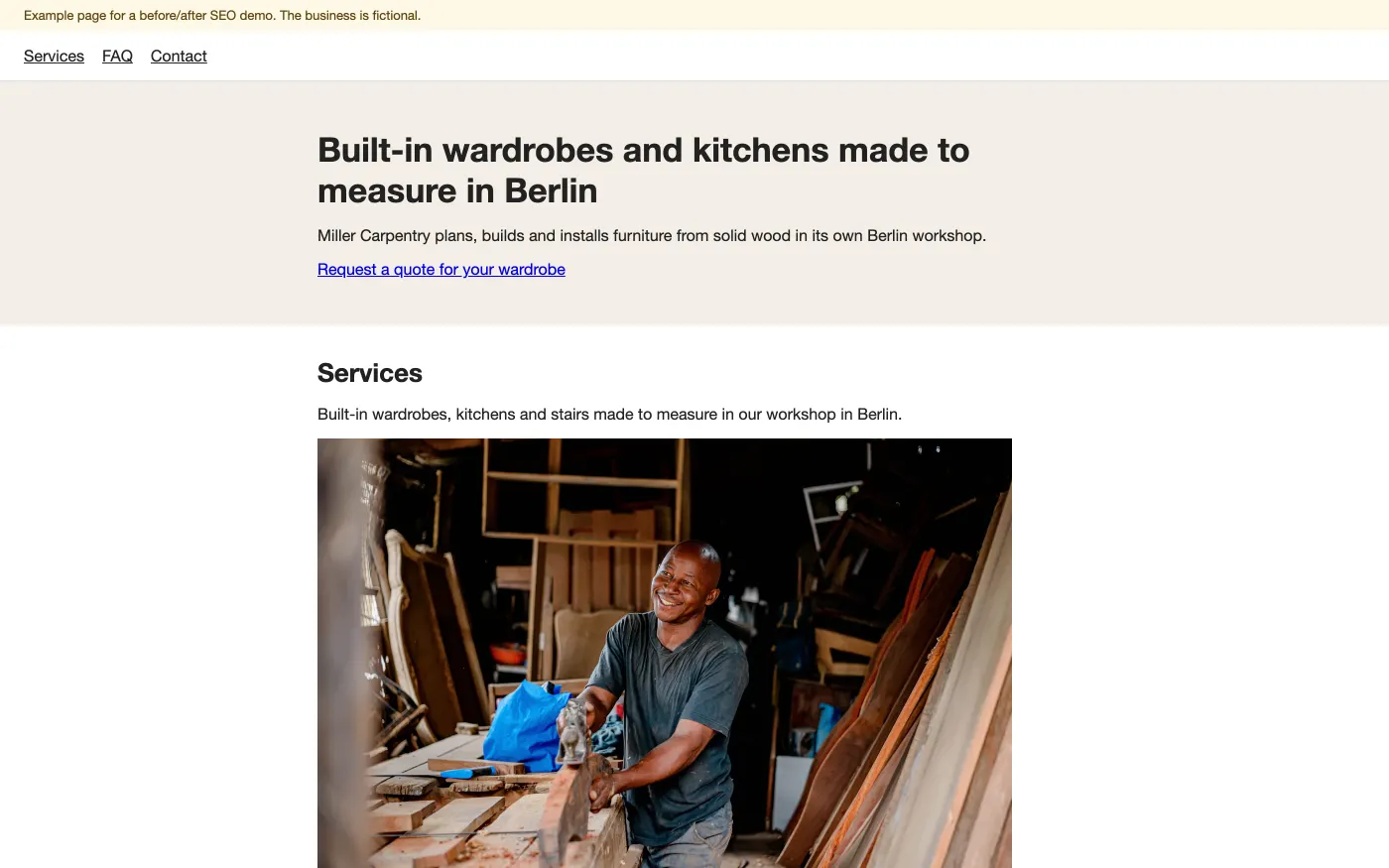 Search and AI visibilitySpeed, search engines and AI crawlers: content that can be read and found.from €690 net€821.10 incl. VAT
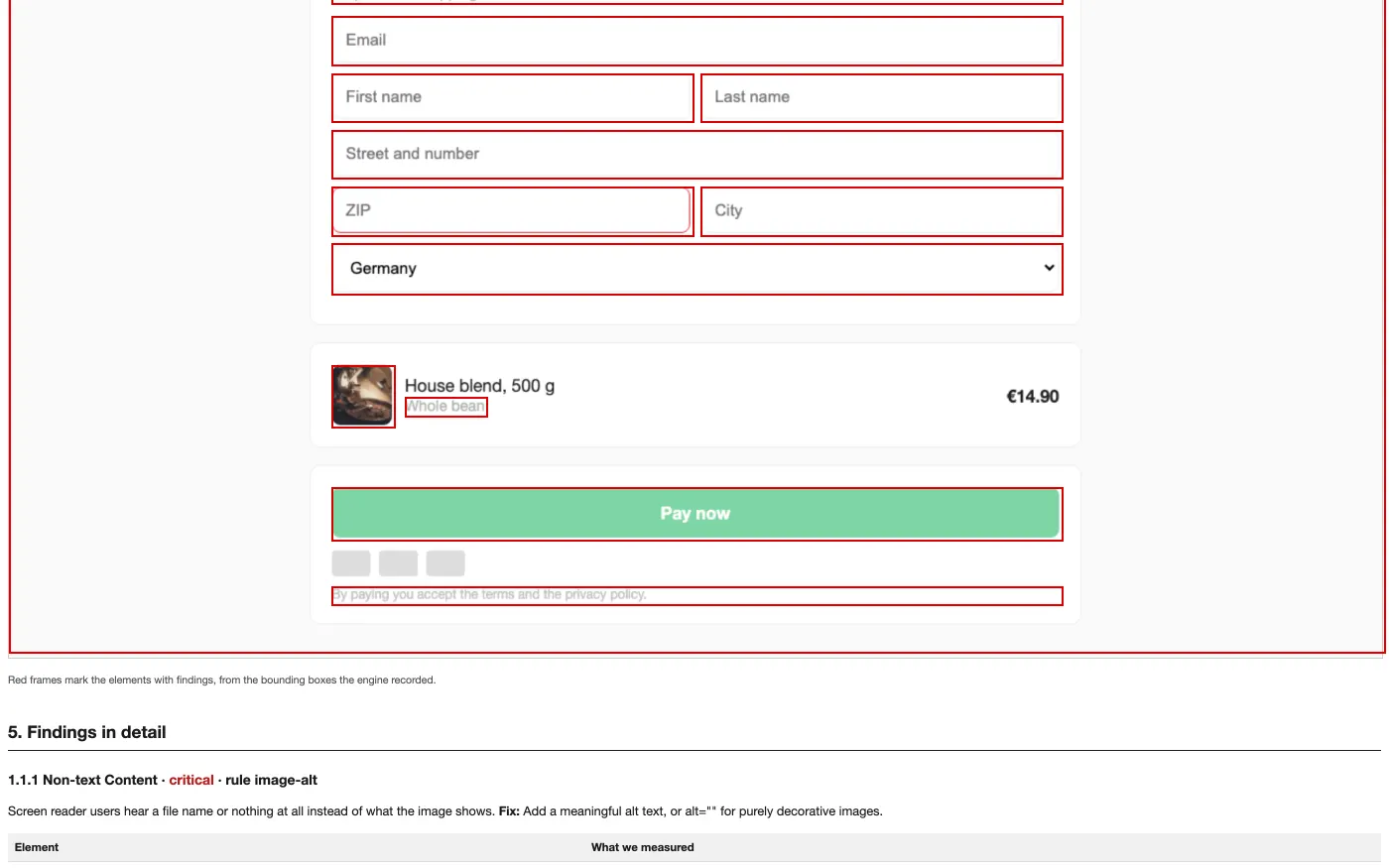 Accessibility remediationMeasured barriers in your existing website fixed in the code, with proof for each point.from €390 net€464.10 incl. VAT
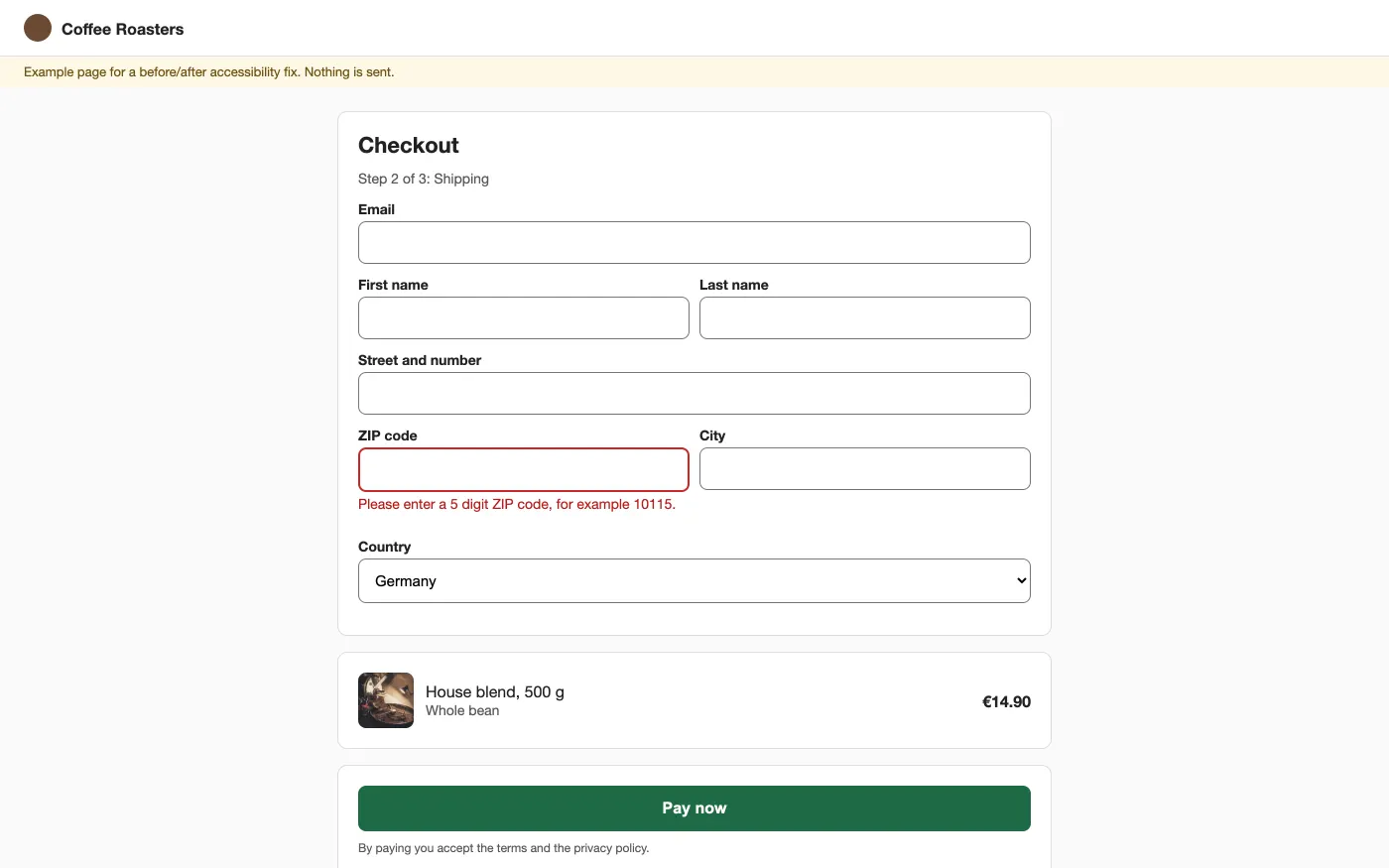 Online shops and the EAACheckout, product pages and forms of your shop reworked against the EAA requirements.from €990 net€1,178.10 incl. VAT
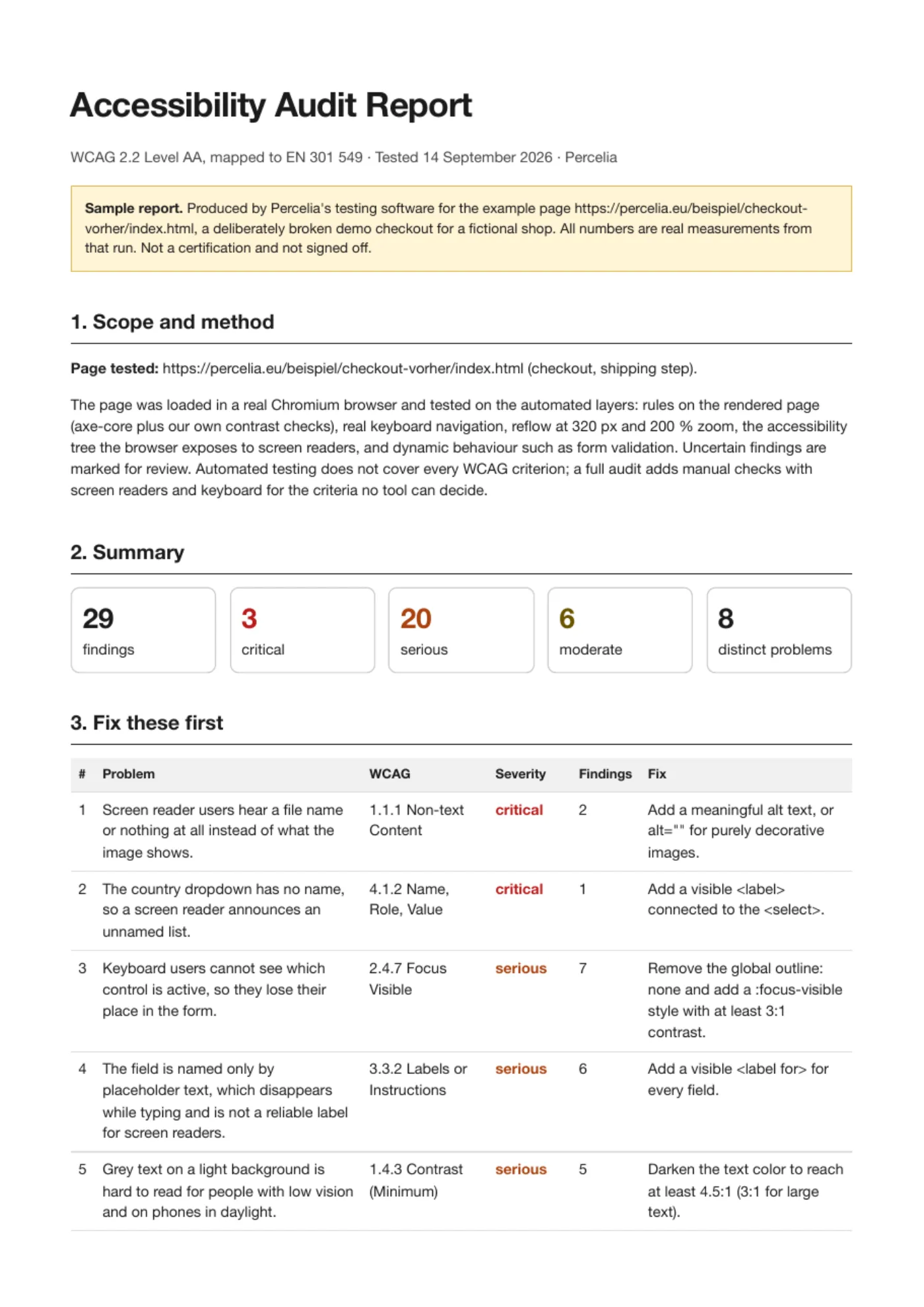 PDFs and documentsEvery linked PDF on your website checked, with findings and a recommendation per file.from €90 net€107.10 incl. VAT
Before and after, measured
Three example pages, deliberately built with typical faults and then fixed. Both versions are public, so you can check every number yourself.
Loading speed
Google PageSpeed, mobile
36before98after
Oversized images, a blocking script in the head and layout jumps removed. Largest element after 2.1 instead of 6.8 seconds.
PageSpeed Insights, Sep 13, 2026
Open before version: Loading speedOpen after version: Loading speed
Barriers at checkout
automated findings, WCAG 2.2 AA
29before0after
Five causes: invisible focus, unlabelled fields, a pay button made of a div, low contrast, missing text alternatives. Automated tests do not cover every criterion.
Percelia testing software, Sep 13, 2026
Open before version: Barriers at checkoutOpen after version: Barriers at checkout
Readable for search and AI
Words in the HTML without JavaScript
0before101after
Content in the HTML instead of injected by script, a meaningful title, description, headings and structured data. Nobody can promise a ranking.
Raw HTML and PageSpeed Insights, Sep 13, 2026
Open before version: Readable for search and AIOpen after version: Readable for search and AI
How we work
Everything in writing. You never need to book a meeting, and every agreement can be read again later.
Request
You send the address and what you need through the form. A few sentences are enough.
Measurement and fixed price
We measure the current state and send an offer: what we do, by when, at what price.
Implementation
In the real code of your website, in your system. No add-on script that merely hides faults.
Proof
The same measurement again, plus a list of every change. You see what improved.
Why Percelia
Measurement, not claims
Many agencies say a site is now fast or accessible. We show the number before and after, with the tool and the date.
Our own testing software
It tests on six layers: rules, keyboard, zoom and reflow, the screen reader's view, forms and messages, plus AI judgement. Checked against the official W3C test collection.
How the software testsFixed in code, never covered up
We do not sell an overlay tool that hides faults while the page loads. The change lives in the source code, and that code is yours.
Work samples
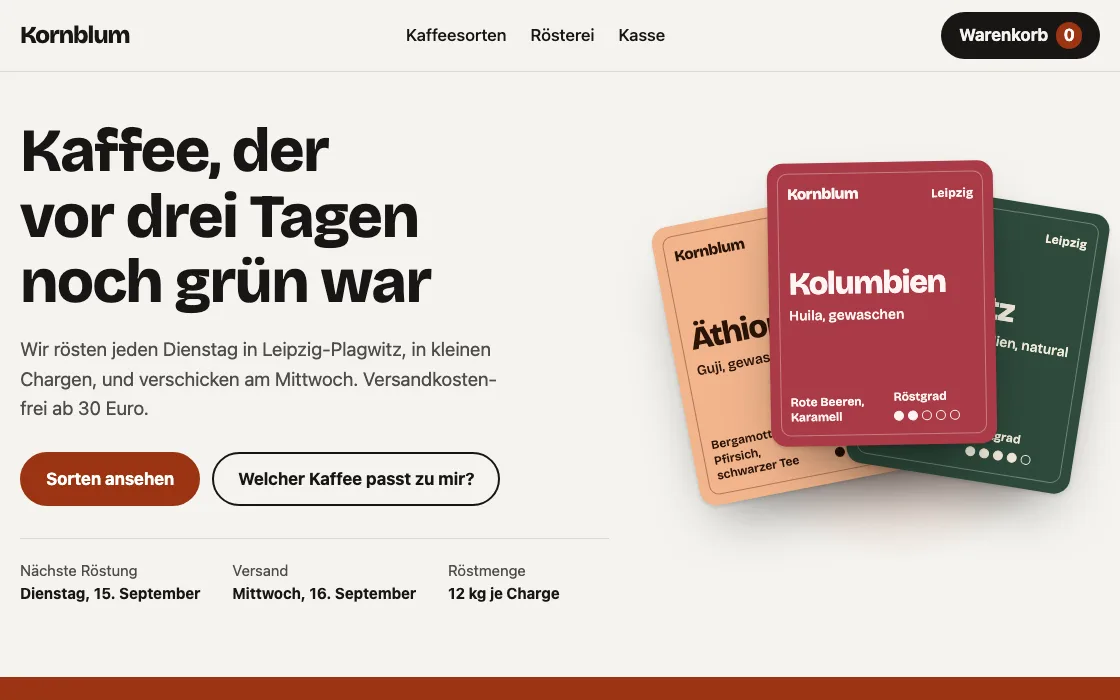
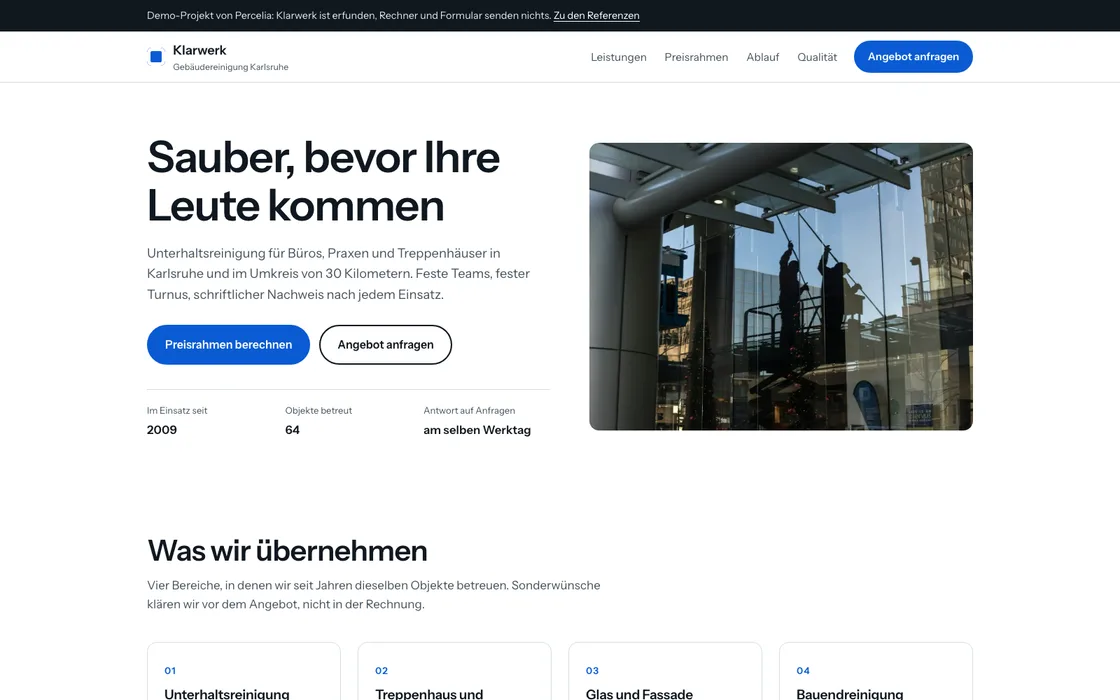
Three example sites for made-up businesses, built as for real clients and tested with our software.

For agencies
You sell, we deliver: testing and remediation for your client projects at fixed trade prices, in a report without our logo and with no contact to your client.
The tool behind the work
Our testing software measures every page we build or repair. You can run it on one page for free: enter the address, see the first findings, no sign-up. It is not a full audit, but it is an honest start.
Start the free checkFrequently asked questions
The law in detail- What does it cost?
- That depends on scope and system. After your request we measure and send a fixed price. Work only starts once you agree.
- Do we need a call?
- You do not have to: request, offer, questions and handover all happen in writing, which is usually faster and leaves everything on record. If you would rather talk, call us. The number is in the footer.
- Is my website fully compliant afterwards?
- Nobody can honestly promise that, and no software can either. We fix the measured, named points, prove every change and say openly what cannot be tested automatically.
- Which systems do you work with?
- WordPress, WooCommerce, Shopify, plain HTML, React and Next.js, plus sites from AI tools such as Lovable, Bolt and v0. For other systems we tell you after the request whether it fits.
- What does the free check show?
- It tests one page automatically for common barriers and shows the first findings. It is a start, not a full audit.
What should get better on your website?
Put it in a few sentences. You get a written assessment and a fixed-price offer.